Rob grew up in North Dalton, and recently returned to watch the Tour de Yorkshire. He’s been kind enough to write a few memories of his time here, and to provide some old photos.
I lived in North Dalton for my first nineteen years, before going to Tech College in Hull for three years and then moving to live and work in London, Kent and finally Shropshire. The first noticeable difference between the village in the 50s–60s and now is that then it was a working village: five farms within the village itself, and many more in the surrounding countryside, plus three shops, two pubs, a Post Office, blacksmith, cobbler, tailor, joiner and a haulage firm, plus a junior school, chapel and church (and a fish and chip shop on a Saturday). All of these except for one of the pubs and the church are now gone. This, I think, is not unique to North Dalton; most villages have lost their rural industries, and although many may be replaced by small ‘work from home’ operations these are not obvious to the visitor.
The photograph of the primary school in 1953 shows 35 pupils. We played in the street, in the plantations on either side of the pond (and sometimes in the pond) and in the fields and lanes surrounding the village: well worn paths throughout the plantations and lanes testified to our presence. The undergrowth in the plantations is now well-grown and healthy, and not trampled underfoot by hordes of kids: does that show a dearth of children, or are they better behaved? It’s not just the undergrowth in the plantations that has grown, and it is good to see that the plantation between the church and pond, which was predominantly populated by elm trees has now recovered from the devastation of Dutch Elm Disease. The stark facades of the former chapel and school are now luxuriant with vegetation. From there being only the one willow tree on the island in the middle of the pond there are now a forest of plants, accompanied by the vegetation in the pond itself. Some familiar trees remain, many are gone, but the village, as a whole, seems much greener.
Gentrification is often used as a derogatory term, but in the case of North Dalton I would take it as a compliment. There are many new houses, several being conversions of farm buildings, or new-builds on now-vacated farms, and all have been done in a sympathetic manner and enhance, rather than detract from, the village.
Historical photos
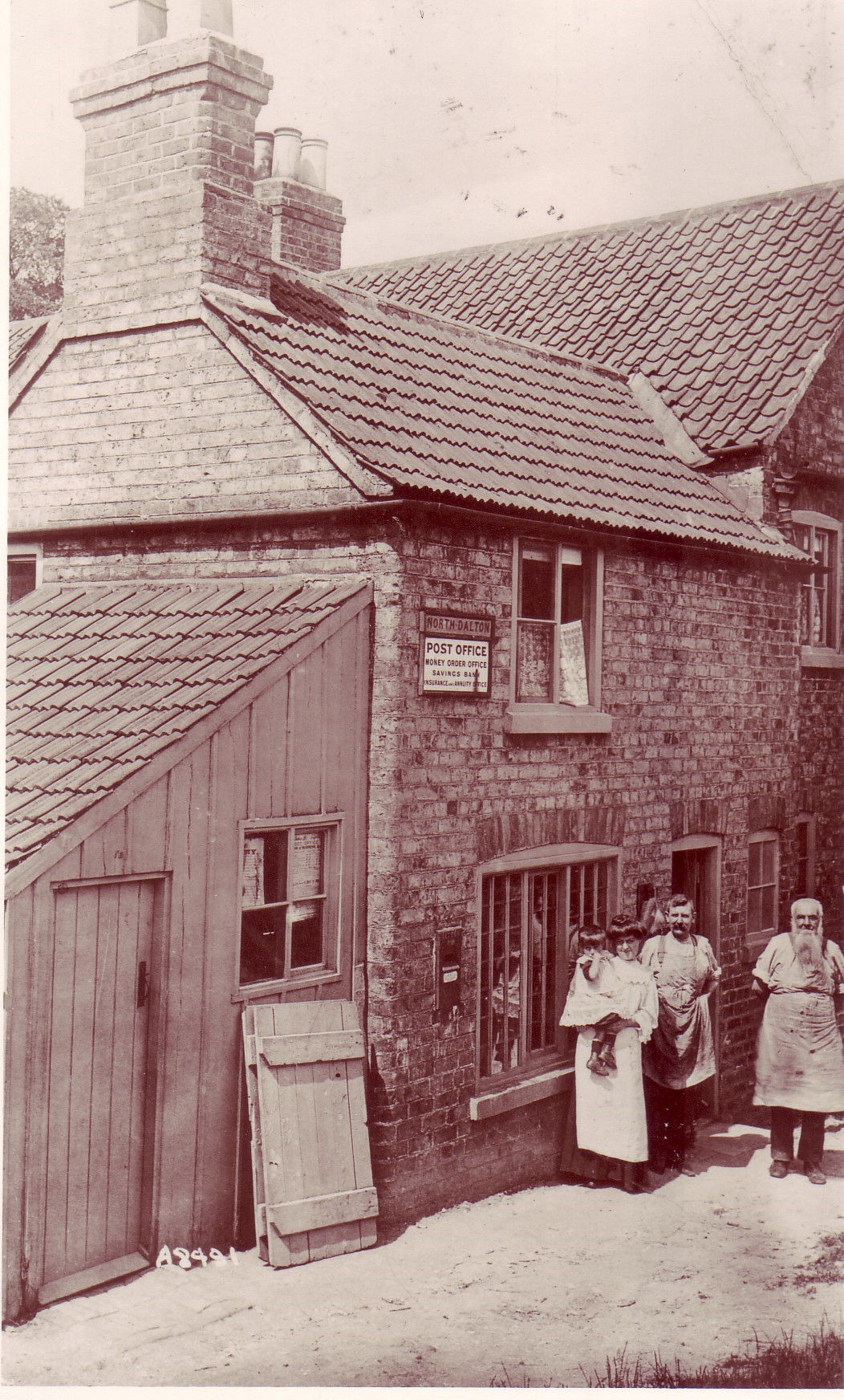
I have a few old photographs of North Dalton; the first one is of my Great Grandfather who was a cobbler. I have no date for this photograph. His workshop was in what I now believe is called Mere View, and the Post Office was in the lean-to on the left.
I never met my Grandfather on my mother’s side, but here is a photograph of him, standing between the two ladies:
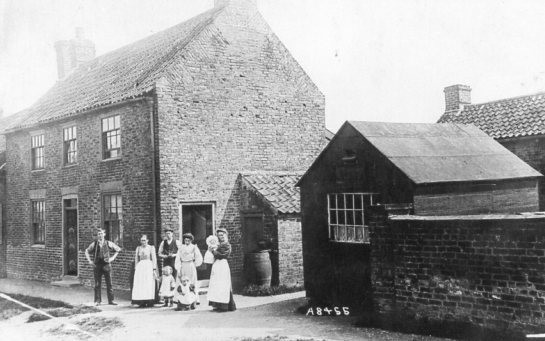
My sister sent this photo to me in 1993 after a flower festival in North Dalton which had a number of old photographs on display; the original belonged to Emily Sellars. The house is the first of the terraced cottages on the right of the road as you are leaving towards Driffield; the shed on the right was used as a fish & chip shop in the late 50s/early 60s.
The Primary School had two classes, one for 5–7 year-olds and one for 7–11 year-olds; the 1953 photograph shows both classes and the two teachers. (I think I’ve got the age groups correct, but I’m not absolutely certain!)
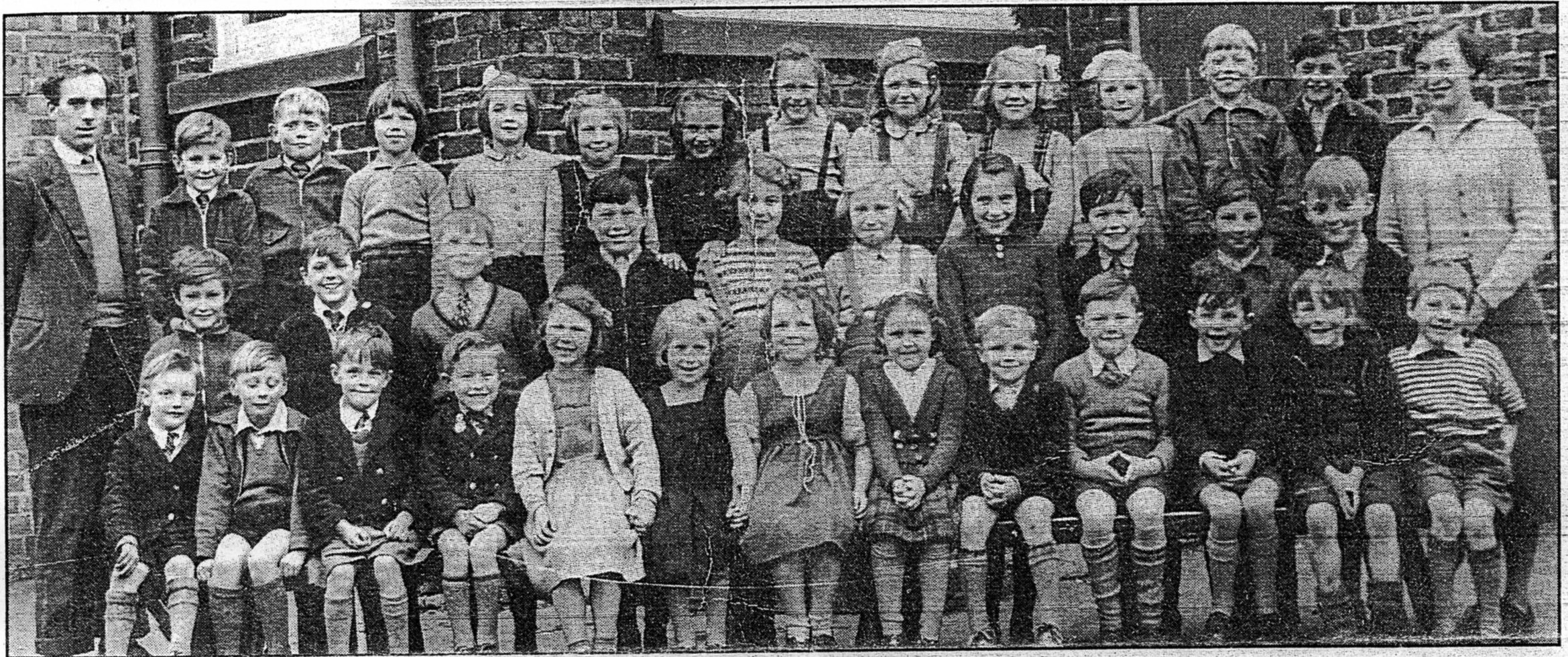
After this appeared in the Driffield Times there was correspondence trying to identify all the pupils and the following is the best that we could do:
Back row:
Robert Baker (Head teacher), Henry Templeman, John Scott, Violet Speck, Gillian Fletcher, Susan Hara, Betty Speck, Valerie Sygrove, Eleanor Robinson, Susan Rispin, Barbara Fearn, Johnnie Cage, Frank Hall, Miss Gledhill
Middle row:
Ian Jackson, Geoff Shaw, George Rookes, Ray Sygrove, Joy Rispin, Wendy Caley, Barbara Templeman, David Connor, Philip Gibbon, Roger Briggs
Front row:
David Barr, Robert Dixon, Peter Ellis, David Wade, Gwyneth Hornsby, Susan Hara, Josie Speck, Katherine Johns, David Wade, Michael Peacock, David Tite, David Sygrove, Geoff Barr
Bold type indicates a good degree of certainty over the accuracy of the names; missing were Denise Lake and Sylvia Lake.
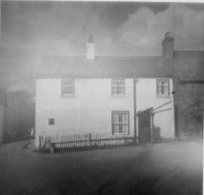
My dad had one of the village shops in what is now called The Old Post Office; this pic shows the house from the south (this and some of the later pics were taken on a Kodak Brownie camera and haven’t stood the test of time!):
The shop was at the other side of the house, and it moved into an extension in the early 60s:
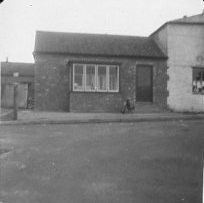
The original building, I believe, had been a farm, and more recently a butcher’s shop before we moved in.
In 1963 my Grandfather Harrison Dixon retired from his job as postmaster (and cobbler) and handed over to my dad, Hardy Dixon; this pic appeared in the local papers:
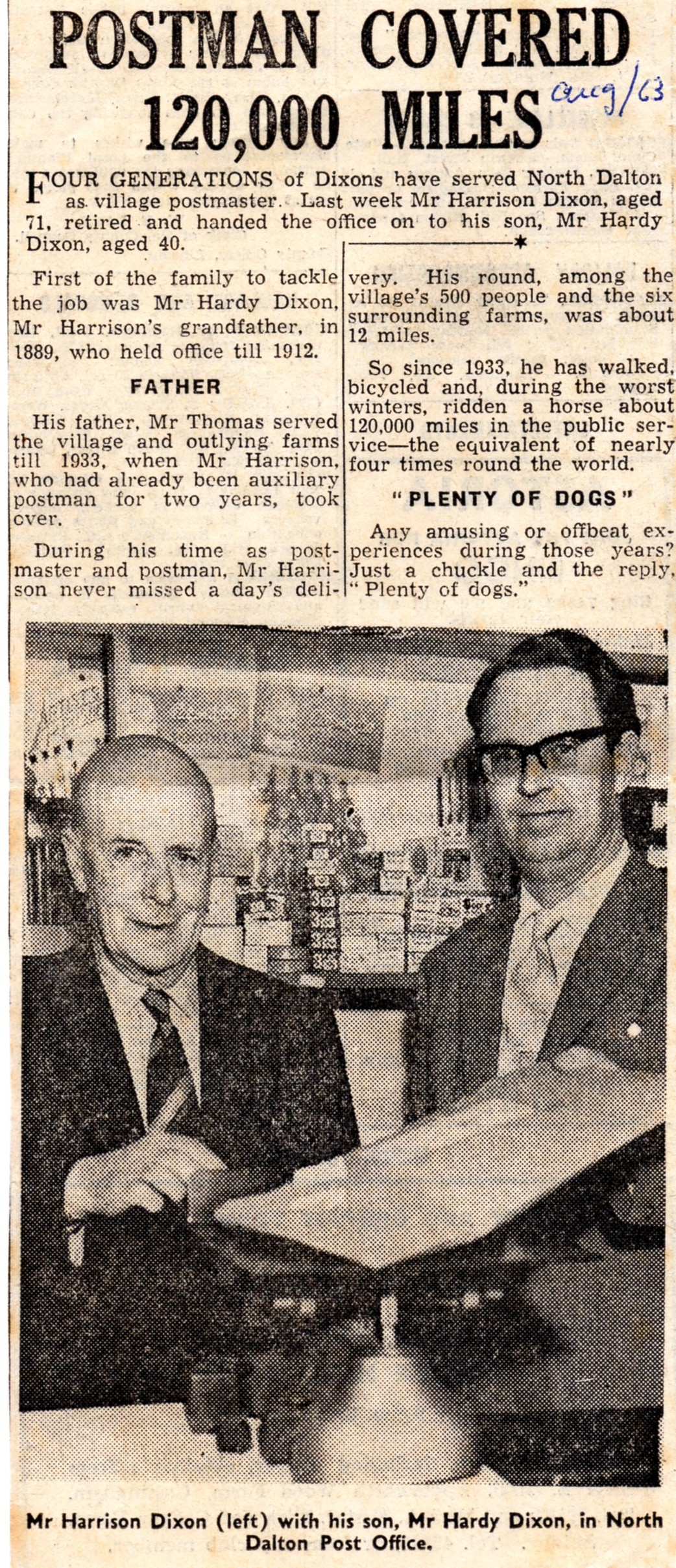
The Post Office moved from its place in the lean-to, shown above, into the ‘new shop’. (You’ll gather from the above that Mere View should really be either The Old Cobbler’s Cottage, or The Old Post Office – if you’re going back far enough! The cottage that Chris Wade lets out, The Old Cobbler’s Cottage, did belong to my grandparents, but no-one ever lived in it while I was there.)
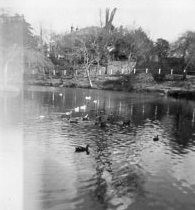
Again not a very good quality pic, but it shows the pond around 1960. The footpath behind the pond was always called The Walk; I’m not sure if it still is but here is a later pic of it:
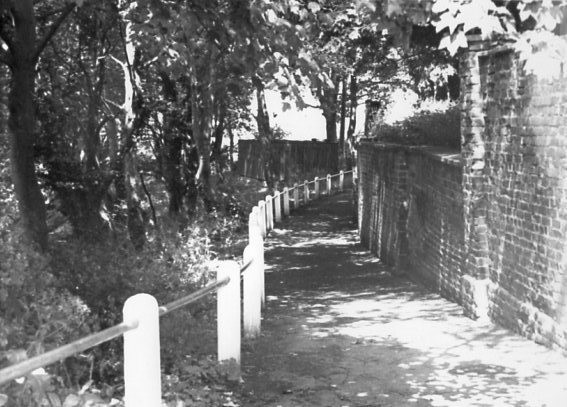
The fence was quite new then, and gave us kids practice at tightrope walking!
Rob Dixon 2017